
• Learn the safest ways to protect high‑value watches at home
• Understand what insurers actually look for when approving claims
• Reduce theft risk and lower insurance premiums at the same time
Owning an expensive watch is only half the equation. Protecting it properly at home is what determines whether insurance actually works when something goes wrong.
Many collectors assume that locking a watch in a drawer or wearing it only on special occasions is enough. It isn’t. Insurers look closely at how watches are stored, who has access, and what security measures are in place before approving claims.
If you want full coverage—and smooth payouts—you need to protect your watches the right way.
Overview
Protecting expensive watches at home comes down to three things: physical security, smart storage habits, and insurance‑friendly documentation.
Done correctly, these steps dramatically reduce theft risk, keep premiums reasonable, and prevent claims disputes. Done poorly, even the best policy can fail when you need it most.
Question: How to protect expensive watches?
Answer: You protect expensive watches by storing them in a secure safe, limiting access, using alarm systems, documenting ownership, and carrying specialized insurance designed for high‑value items.
Why Home Storage Matters to Insurers
Insurance companies don’t just insure watches—they insure risk.
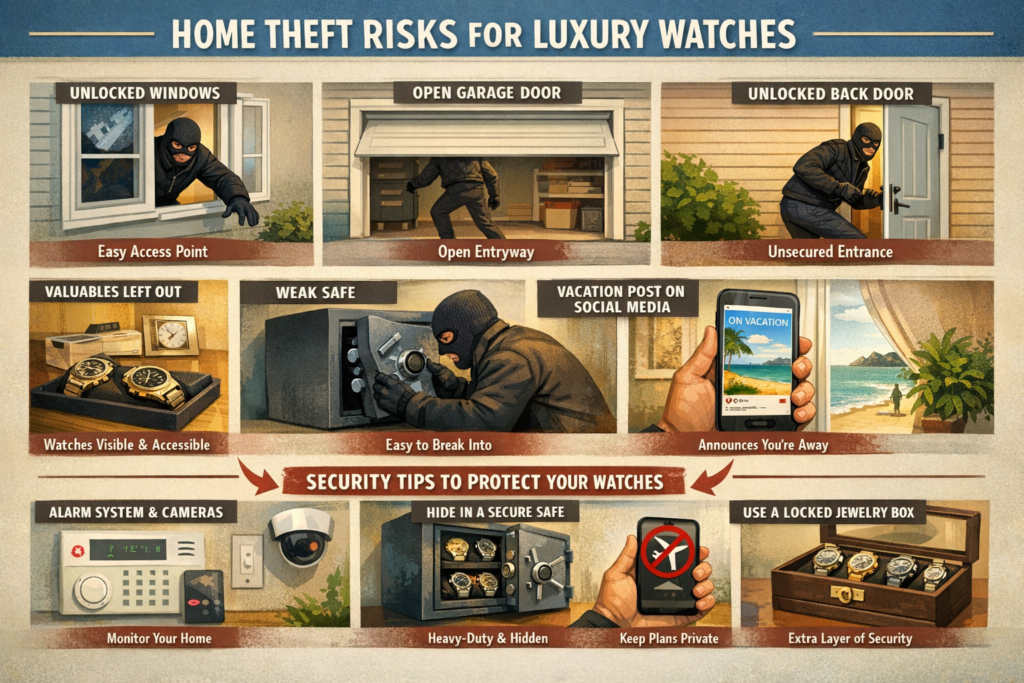
If a watch is stolen from an unsecured drawer, insurers may question negligence. Proper storage reduces both theft risk and claim scrutiny.
This is why luxury watch insurance exists—standard homeowners policies weren’t built for portable, high‑value assets.
Best Ways to Secure Watches at Home
Use a Quality Safe
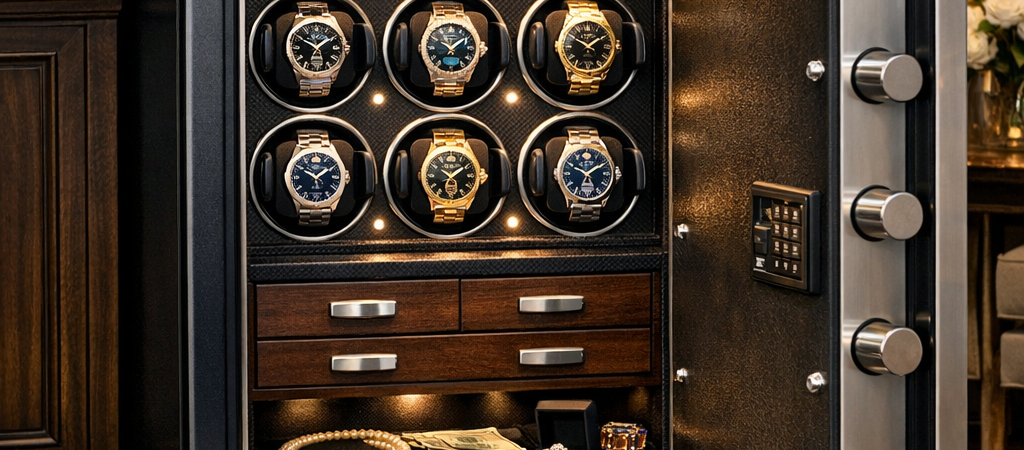
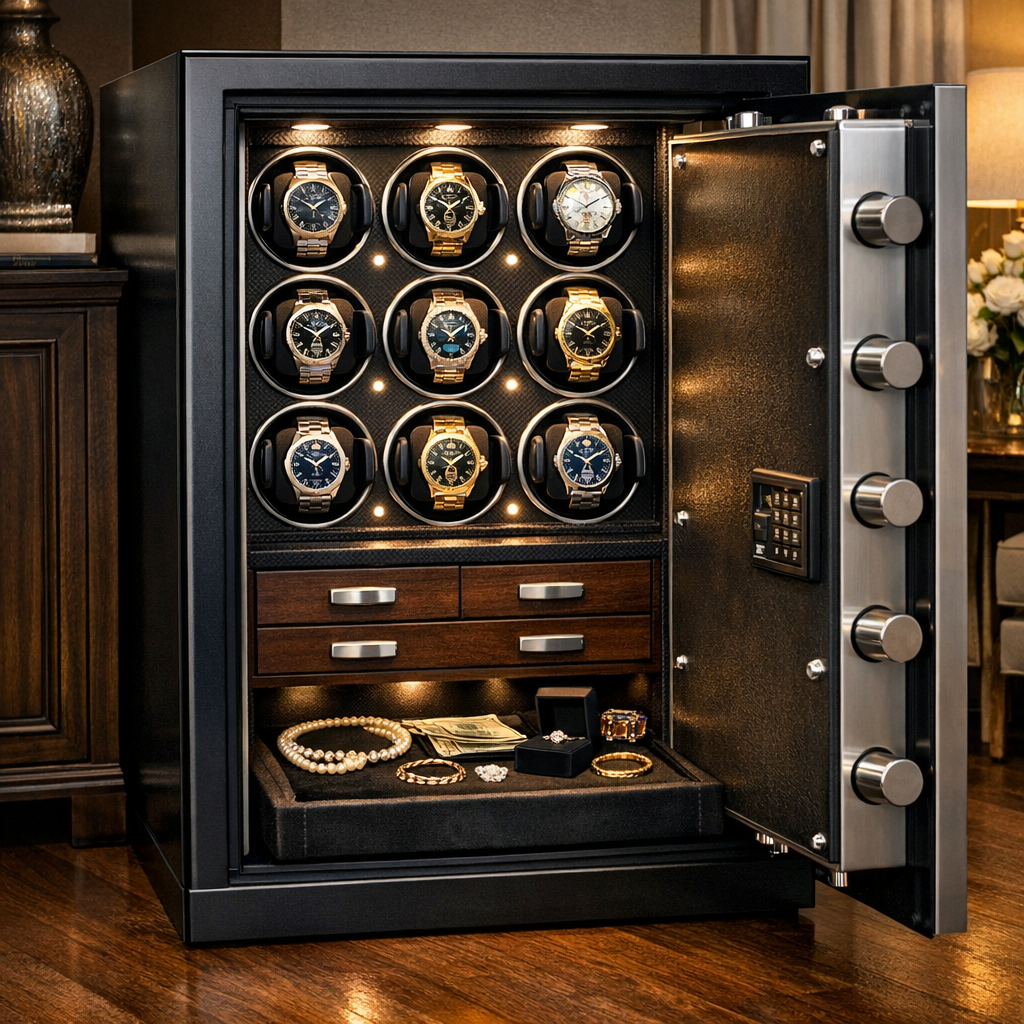
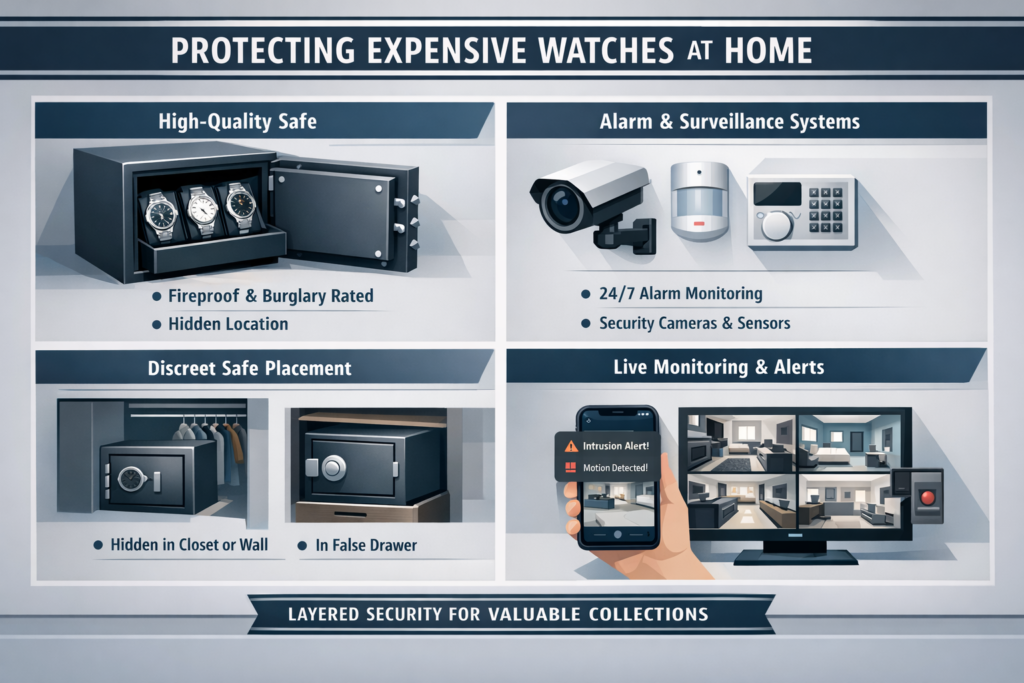
A fire‑rated, bolted safe provides the strongest protection. Insurers favor safes anchored to the structure rather than portable lockboxes.
Limit Access
Fewer people knowing where watches are stored lowers risk. Avoid leaving pieces visible to guests or contractors.
Separate Storage from Wear
Rotate watches, but return them to secure storage immediately after use.
CTA 1
Compare insurance policies that reward proper home security with lower premiums and fewer claim disputes.
Alarm Systems and Insurance Discounts
Many insurers offer premium reductions for monitored alarm systems.
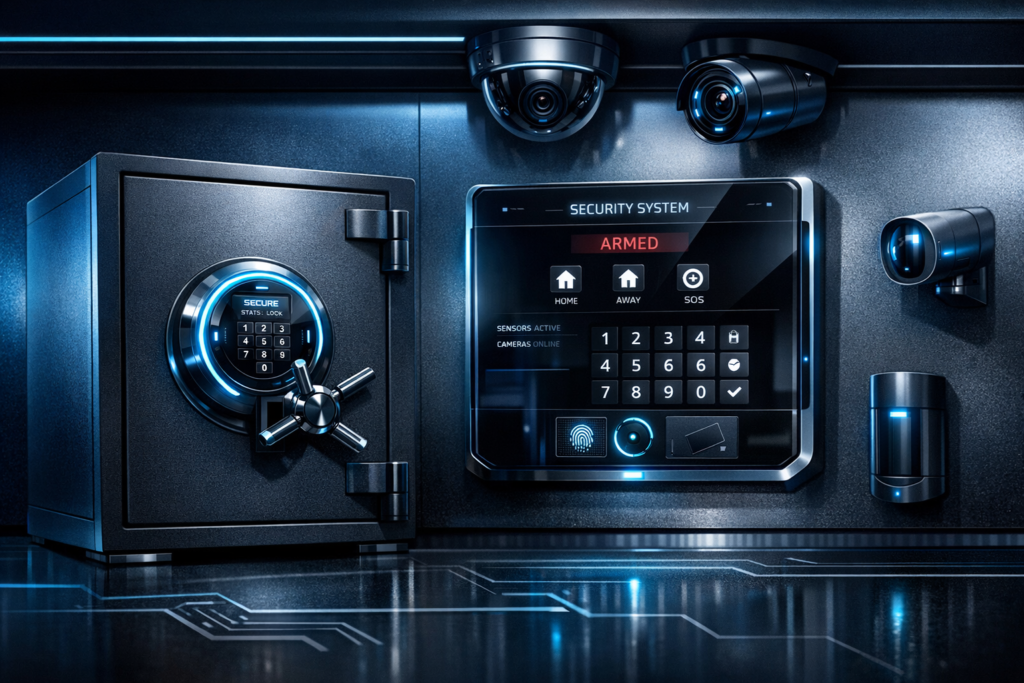
Security cameras, motion sensors, and professional monitoring reduce both risk and insurance cost. Some insurers may require alarms for collections above certain thresholds.
Documentation That Protects You During Claims
Home security alone isn’t enough—documentation matters just as much.
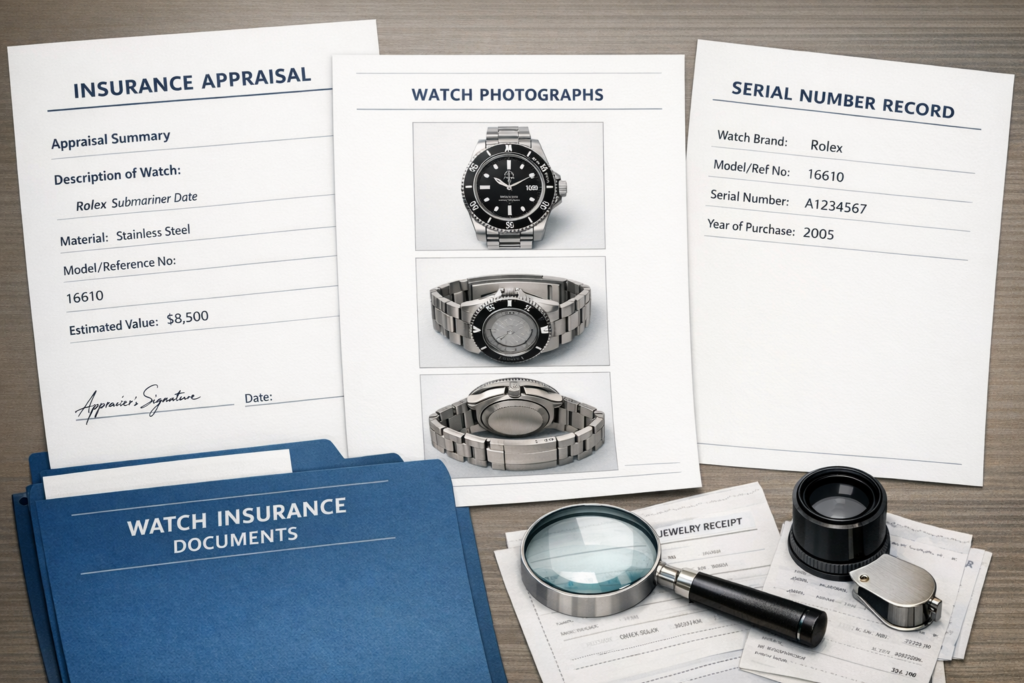
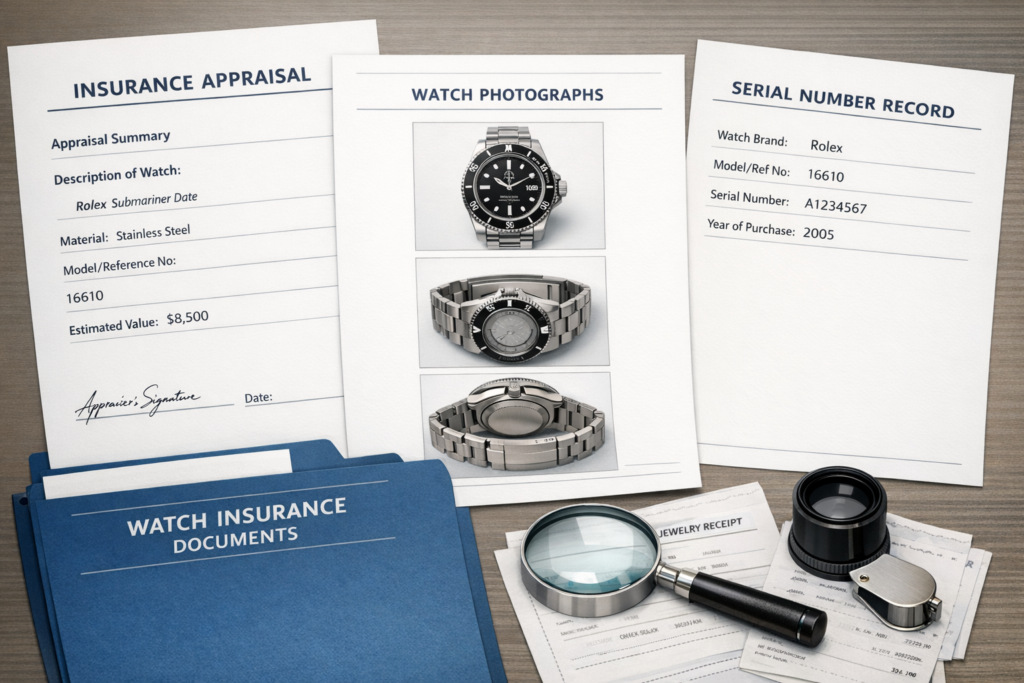
Keep: • Purchase receipts
• Appraisals
• Serial numbers
• Photos of each watch
• Updated valuations
According to U.S. insurance regulators, high‑value personal items often require separate scheduled coverage beyond standard homeowners policies.
For valuation guidance, see How to Appraise Your Watch for an Insurance Policy.
Insurance Considerations for Home‑Stored Watches
Even the best home security can’t eliminate risk entirely.
Dedicated insurers offer: • All‑risk coverage
• Mysterious disappearance protection
• Worldwide travel coverage
• Agreed value payouts
To compare options, review best luxury watch insurance options and provider breakdowns like BriteCo vs WAX Insurance.
CTA 2
Get quotes from insurers that recognize proper home storage and security measures.
Quick Checklist: Home Protection Basics
• Safe anchored to structure
• Monitored alarm system
• Updated appraisals
• Limited access
• Secure documentation storage
Key Takeaways
Protecting expensive watches at home requires physical security, disciplined habits, and the right insurance.
Proper storage reduces theft risk and increases claim success.
CTA 3
Protect your watch collection with insurance that matches how you actually store and safeguard your watches at home.
Next Read
• Best Luxury Watch Insurance in 2026
• Is Homeowners Insurance Enough for a $10,000 Watch?